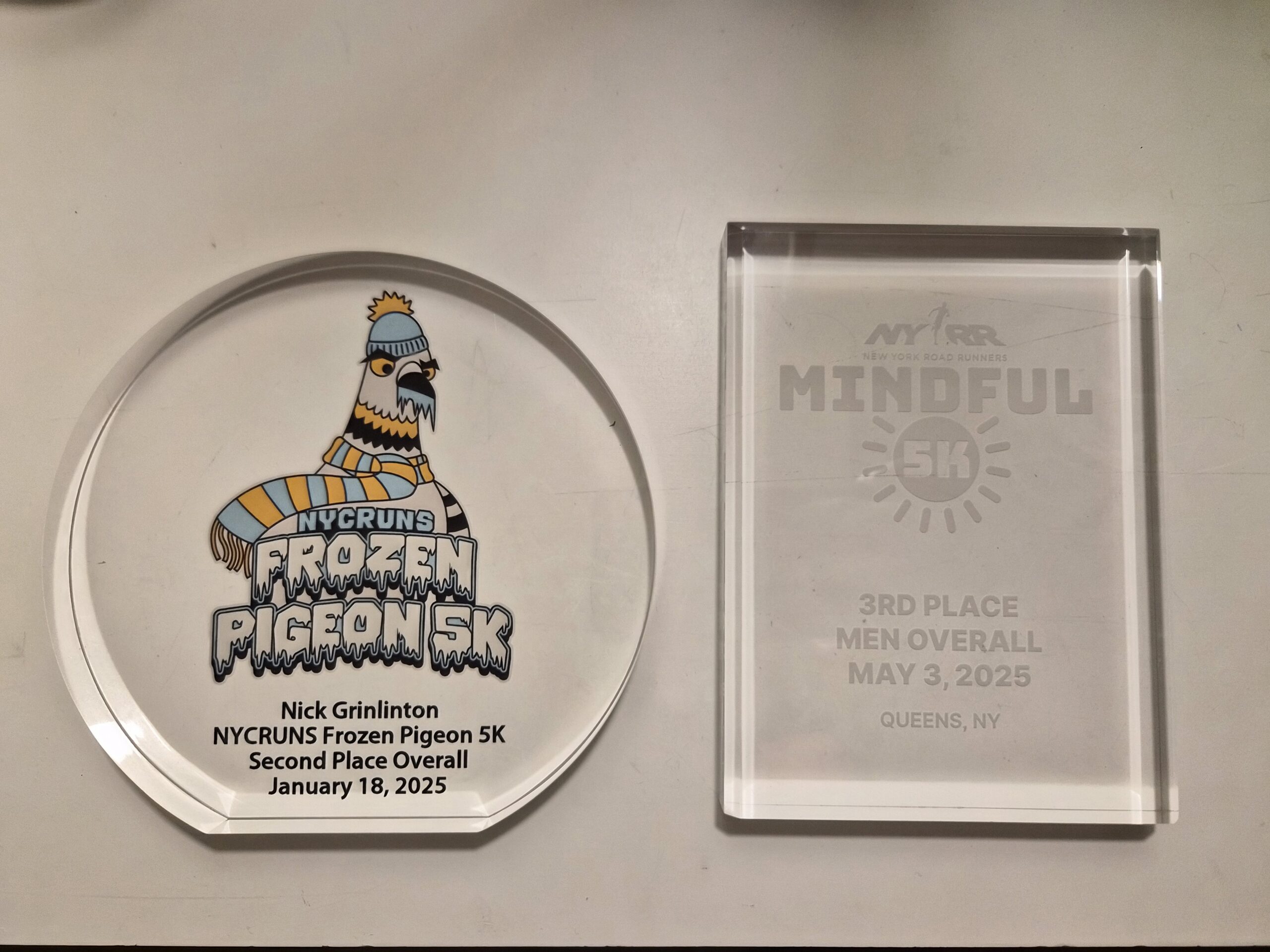

I preceded this year with the goal of tackling unfinished business. In my quest to arrive at my best fitness yet, I unanticipated that 2025 would lead me to unearth just what exactly held me back in previous years of my development. After all, probing through the weeds of exercise physiology takes a bit of time to understand. It takes wisdom to put academics into a practical application as well as realization: what exactly happens when coming across contradictory information? Example: Developing more mitochondria by running easy helps improve running economy. Mitochondria does not have any correlation with running economy. Wait, what?

Fortunately, the best coaching travels way ahead of the science. Effective training has stood the test of time. No mental gymnastics needed. Studying the historical lineage of training (Arthur Lydiard, etc.) and keeping current helps with sorting this stuff out. Staying informed, not at face value, would honestly solve a lot of issues with making training programs optimal. Surely, runners would thrive better understanding the underlying principles of training rather than piecing together random breadcrumb workouts that influencers post. Best yet, optimal program design for distance running is simple once it’s understood.

My comprehension and intent with training came into fruition during the middle of this year. Albeit much beyond the scope of this post, I worked on developing a bigger aerobic base for my abilities. I stumbled upon the training programs of Kristoffer Ingebrigtsen (Jakob’s older brother) and the sweet spot approach adapted to running by James Copeland. This helped me set the parameters for basically pushing my aerobic ability up from below on a limited time schedule. In other words, I’m essentially shifting the lactate curve more to the right.

Not excluding what I previously developed and learned, I placed more emphasis on developing a more robust aerobic system. My high end aerobic abilities were well developed. I could tolerate the high end aerobic and more metabolically unstable work, but at the expense of either overtraining or not completing as much work. Further, with 11 years of training under my belt, I never really developed my ability to utilize fat for aerobic metabolism.

Keeping it current to the 21st century: I structured my training with repeatable and sustainable weeks; more in line with the Norwegian influence rather than the Italian school of training (i.e Marius Bakken more so than Renato Canova). Conceptually, I find both philosophies and structures useful. For my abilities and schedule though, the repeatable weeks offers the consistency I need without overthinking how to program and achieve the right periodization. Nothing against this, but it becomes difficult and stressful to time everything to arrive race ready. I’m more a fan of progressive overload than supercompensation at this point in my life.

Training intricacies deserve a separate write up for sure. However, I found that this structure of repeatable weeks helps provide clarity on when to sharpen up for a goal race. This clarity lies within monitoring fitness over time. Maybe a controversial take, but the ability to see fitness becomes more straightforward when repeating the same workouts. Personally, I find it easier to know what shape I’m in this way than to program speed and endurance support to arrive at a time goal. I’ve tried both ways. I have the tool box and the knowledge to revisit this approach if I really only care about one particular event in the future, though.

Moreover, sometimes what looks good on paper will not translate well in training, especially with an underdeveloped aerobic engine. Consistency beats any type of crazy workout. Not changing too many variables at once reaps major fitness gains over a long period of time. This year, I’ve definitely learned the importance of understanding your own metabolic profile in regard to structuring a training program. Coaches, please don’t assume everything works linearly. Listening and observing is a fundamental skill, not using AI or copying stock training programs to give to clients.

Miles Davis once said, “Sometimes you have to play a long time to be able to play like yourself.” Development takes a long time. One needs faith and trust to see the process through, especially when most people’s minds are conditioned for the need to run hard in training for results. The true value of running easy is the ability to complete more work to become fitter. At least until room runs out to do so. As a personal testament: I’ve lost zero fitness working out this way. In fact, I feel fresher mentally and physically for races. Seeing where to bridge the gap is easier to understand training this way as well—where to add hill sprints, rhythm 200’s, etc.

This year made me realize the merit of seeing the whole picture without losing myself with the academic and science side of training. After all, consistent work is the key to improvement. No need to overthink when the science becomes internalized—akin to how great musicians use music theory to inform, not dictate, what to play. One then truly sees what others might not see and how to work around problems. Now, I have the viewpoint of how concepts play out practically while having the framework in place to realize my potential. Form follows function. I’m not replacing what I’ve previously learned, I’m only enhancing it.

As we enter 2026, I encourage all runners to stay sharp with all the information out there for consumption. Lastly, no perfect training program exists. Don’t read one book. Read multiple books and adjust to your situation. Listen, investigate weak areas, ask questions and most importantly: enjoy the process of improving!